

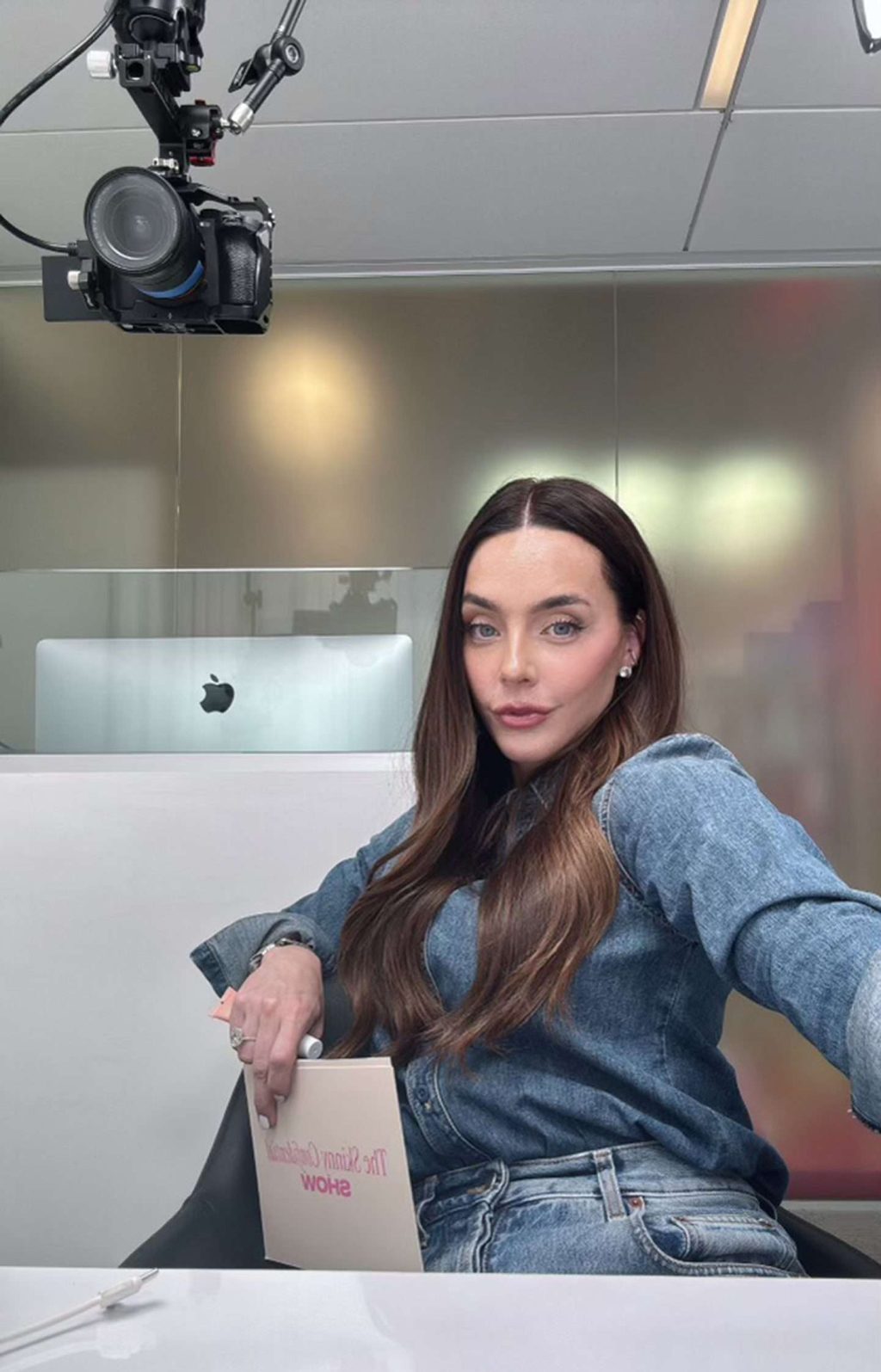
 Michael and I get so many questions about how to start a podcast. From interview tips to home equipment recommendations.
We launched a podcast out of our living room after too many ginger margaritas in Cabo. Anyone and everyone can start a podcast, whenever they want and where ever they want. Podcasting is a booming platform because it save the audience time while they’re able to learn and get other things done too. It’s an amazing way to multi-task.
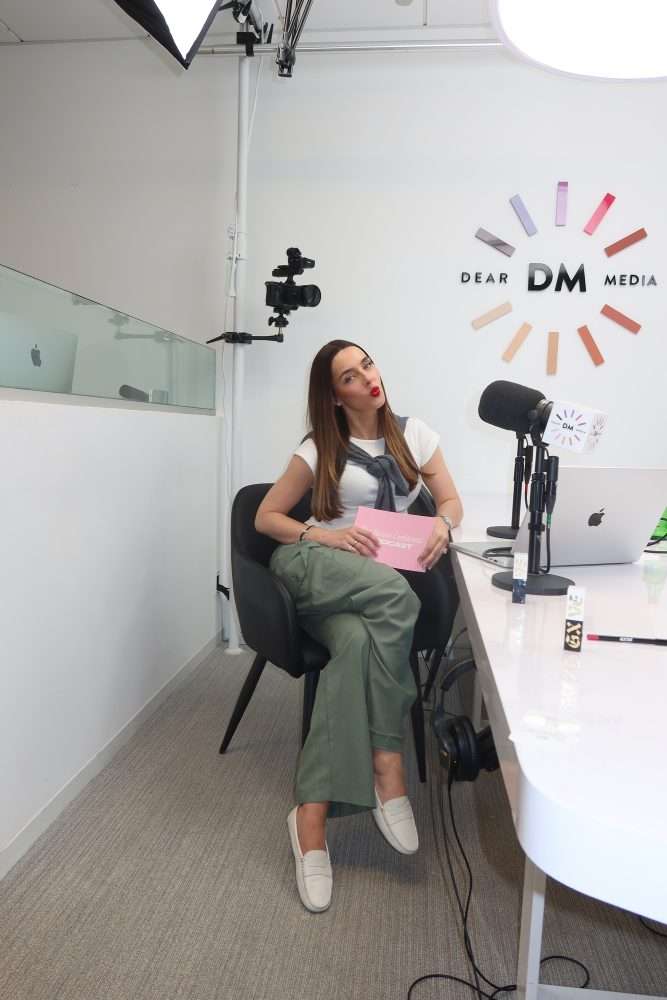
Now that Dear Media has a stake in the game, we have some great in-studio equipment. Michael and Taylor, through trial and error, have found the best equipment for the studios (LA and ATX) so that we could master audio over the years, then move onto incorporating video. However, if you’re starting your podcast at home like we did, then you may want to take a look at this equipment we used to use.
In this post you’ll find all the home equipment we used at home, for traveling and what you need to build your sound studio. Also, I’m going to share my tips on what I think makes a compelling interview if your podcast features guests.
Let’s get into it.
PODCAST EQUIPMENT
Out of Studio Mics
These are the mics we use when we are NOT in studio. You can hold them or put them on mic stands. We did almost all of our early podcasts with these.
+ built-in wind and pop filter.
+ shock system cuts down on handling noise.
+ isolates main sound source and minimizes background noise.
In Studio Mics
We use these in studio. They need stands and are the very best, but may be overkill.
+ improved rejection of electromagnetic hum, optimized for shielding against broadband interference emitted by computer monitors.
+ has detachable windscreen, designed to reduce plosive sounds and gives a warmer tone for close-talk vocals.
+ flat, wide-range frequency response for exceptionally clean and natural reproduction of both music and speech.
Cords for Mics
+ protective metal housing.
+ 20 ft long.
+ all copper conductors and inner copper spiral shielding; shielded cable reduces interference and excess noise.
Windscreen for Mics
+ protects from exhales, wind and ‘singer’s spit’.
+ designed for normal sized mics.
Basic on-the-go Recorder
This is great for when we traveled or do interviews on-the-go (which we don’t do anymore – all interviews must be in person). It’s basic and has 2 mic inputs.
+ records directly to SD/SDHC cards up to 32 GB.
Headsets
In Michael’s opinion, these are the best for podcasting. They record your true voice, so what you hear is what you’ll get.
+ lightweight and comfortable, ergonomic design, Cord Length 3.3 9.8 feet coiled.
+ around the ear design with padded ear cups, Dynamic, closed ear headphones with up to 32 dB attenuation of outside sound. Frequency response (Headphones) 8 25000 Hz.
+ ear pads, headband padding and audio cord are easily replaceable, ensuring long life.
Multiple Headset Jack
+ ultra-compact headphone amplifier system for studio and stage applications.
+ highest audio quality with virtually all types of headphones even at maximum volume.
Mic Stand
+ includes two desk mounting options.
+ 2-axis swivel mount for accurate positioning.
+ rotates 360 degrees with a maximum reach of 32.5 inches horizontally and 33 inches vertically.
EQUIPMENT WE USED FOR SKYPE INTERVIEW/PODCASTS
*As I said, we don’t do these anymore. We now only do in-person shows in one of the studios.
Call Recorder
+ high-quality, HD recordings.
+ easily converts calls into MP3 files for podcasting or internet-ready movies for YouTube and Vimeo.
Mic for Multiple Voices
You need a mic that can record multiple voices if you have more than one interviewer.
+ condenser microphone with digital output for convenient, high-resolution recording.
+ smooth, extended frequency response ideally suited for podcasting, home studio recording, field recording and voiceover use.
Other Options:
Mic & Headset Combination
Lewis Howes from School of Greatness used these. We used these for most of the second half of 2017 and when we travel for interviews. These allow you to just put a headset on and talk.
+ mic features polar pattern and frequency response tailored for intelligible vocal reproduction.
+ rugged design with user replaceable cable and ear pads.
+ boom mounted microphone can be positioned on the left or right side.
USB Audio Interface Tool
Some podcasters use this to record directly into their Macs.
+ two natural-sounding Scarlett mic preamps with plenty of even gain; two instrument inputs, 1/4-inch balanced jack outputs to connect professional studio monitors; one headphone output with gain control.
+ class-leading conversion & sample rates up to 192kHz / 24 bit; super-low roundtrip latency for using your plug-ins in real time without the need for DSP.
If You Want to Build an Actual Sound Studio:
Behringer 16 Input Bus Mixer with Audio Interface
+ premium ultra-low noise, high headroom analog mixer.
+ 4 studio-grade compressors with super-easy “one-knob” functionality and control LED for professional vocal and instrumental sound.
+ new studio-grade FX processor with 16 editable presets including reverb, chorus, flanger, delay, pitch shifter, multi-effects, Tap function and storable user parameter settings.Phantom Power : +48 V Phantom.
Apogee Audio Interface
+ USB 2.0 High Speed connection to Mac or PC.
+ software control of hardware parameters including input selection and low latency monitoring.
+ direct digital connection with iOS devices (iPhone, iPad & iPod touch. 30-pin/ Lightning cable sold separately).
Headphones Amplifier
+ professional multi-purpose headphones amplifier system for stage & studio applications.
+ highest sonic quality with virtually all types of headphones even at maximum volume.
+ 8 independent Direct inputs provide up to 8 individual stereo mixes.
Editing Software
We like to use Garageband and pro-tools when we edit ourselves. When our engineer edits for us, he uses Adobe Audition and Protools.
There you have it. Straight from the horse’s mouth. Those are all Michael and Taylor’s recommendations for how to start a podcast at home. This is what we did anyway. If you have questions or other recommendations on home equipement please let us know in the comments so everyone can use it as a resource.
LAURYN’S PROCESS FOR A COMPELLING INTERVIEW:
When it comes to interviewing guests, I always want to make it about them. There are a ton of hosts out there who love the sound of their own voice and are just waiting to speak themselves. Naturally, I’m curious so this isn’t too difficult for me. I always want to understand the full story, get to the nitty gritty, and ask questions that other podcasters may not think to ask.
If one of our guests have written a book, 90% of the time I will have read the book before they come on. It helps me understand who they are, where they’re coming from and leads me to questions I may not have asked otherwise. This is much better research than just looking them up. In fact, most of our guests I’ve found from reading. That might be their own book, or someone else’s where they’re mentioned, or a completely unrelated book that brings me to them in some way.
For instance, recently I finished a book about Jackie O and it got me thinking, and then led me to some guests I’ve asked to come on the show.
Our guests don’t have to be famous, or well-known, or have thousands of followers. They only need a fresh perspective, a unique point of view and to be themselves. I like someone who is going to bring their own opinion to the table. Then, I do as much research as I can personally. After that, someone on my team helps me write out my ideas and questions, refine them and then I’ll go through the sheet before the show to highlight certain areas and write my own notes.
Michael and I have different perspectives, therefore different questions. We’ll strategize before the show and talk about how we want to approach the guest and certain subjects. I think the audience enjoys both the masculine and feminine approach to our guests.
Anyway, the key is to be well-researched, ask questions they don’t usually ask and let them be the star of the show. Although I like to know all I can about them, I actually don’t go watch and consume every single thing they’ve ever done. This helps with developing your own questions and avoids repetitive interviews.
ONE LAST TIP:
Start now. It’ll never be perfect, there will never be a good time so just do it. You’ll improve and refine along the way, you’ll listen to your audience’s feedback and edit and pivot as you go. Trust the process. It doesn’t happen overnight.
What are your podcast tips? Let us know everything below.
x, Lauryn
+ Listen to the latest on The HIM & HER Show.
+ Subscribe to our monthly favorites newsletter here.START NOW:

I really wanted to know though! helpful for sure!
Of course! xx
I’m not looking to start a podcast, but this post is so helpful to see all the equipment that goes into it all. That’s crazy! I honestly thought all you need is a mic. Lol
We just want to put out a great podcast! Thanks for reading!
Thanks for this info!! I’ve been researching the best equipment and now I can just go buy what you’ve suggested, as I always do, cause I live TSC. Xoxo
Thank you for your support! Xx
This is amazing! I’ve been doing my podcast for about four months (it’s called Working Girl Talk?) and I’m obsessed with sound quality! It has been a huge learning curve and it’s gotten better, but I’m always looking for ways to improve it. This was super helpful! Excited to invest in some of these tools. Thanks, Lauryn!
Good luck on your podcast 🙂 Thank you for reading!
Hey beauties thank you for this awesome info. Im starting my own podcast and really excited about it. Just bought my mic 😉
go girl !!!
I’ve been waiting for this post. Thank you for sharing the equipment you use. I started with the blue snowball/Yeti and want to upgrade.
Love your podcast.
Thank you for sharing! We just started our podcast called Sippin’ With Us and we have been having audio issues so this will be helpful to know what to use
best of luck!
Thanks for this!!!! My husband has the equipment I just am intimidated to launching in what seems to be a compacted space for mental health content.
best of luck
Loveee all of this info, thank you so much! Any insight on curating the perfect podcast intro? Thanks! xx
keep it on brand !!
Hello! I have a question I hope can be answered! My partner and I have a podcast!! We have invested in the best equipment most listed here. We love podcasting and our audience loves it too! What we are using is the shure sm7b microphone, connected to cloud lifter, connected to zoomh6. We are getting great sound but still can hear some white noise in the background of the recording when we listen before editing. We hear some of your podcasts and notice there is NO white noise sound and wonder how you get it so absolutely clear! Went have invested so much time and money so we want to get it perfect! (So much research and YouTubing has been done to try to figure this out) thank you so much! Hope you can help! (By the way we usually use Final Cut Pro to edit)
Thank you for the detailed information! I am thinking to start a podcast but unsure of how much money do I need to budget to start? How much money do I need to get all the starter equipment? Any ideas on that? Thanks again.
Definitely budget out time for the equipment here & time to get it up & running!
Thank you so much! You two were our inspiration for starting our mother daughter podcast. We are so excited to grow and upgrade our equipment.
Thank you thank you thank you for sharing your knowledge.
The Southerland Girls
@southerlandgirls
Thank you so much. My friend and I just started a podcast together called The Wellness Edition !!!
This was such a helpful post, thank you for breaking it all down so clearly! I’ve been thinking about starting a podcast for months, and this gave me the final push I needed. Also, I’ve been using Notube to download some of my favorite YouTube interviews to audio so I can study hosting styles on the go super tool for anyone starting out!
This was such a helpful post, thank you for breaking it all down so clearly! I’ve been thinking about starting a podcast for months, and this gave me the final push I needed. Also, I’ve been using Notube to download some of my favorite YouTube interviews to audio so I can study hosting styles on the go super tool for anyone starting out!