

We’ve seen a lot of people sharing photos of themselves wearing weighted vests for weight loss in their IG stories lately. They wear them while out on their morning walk, running errands, or even when they’re doing bodyweight workouts. We wanted to learn a little more about them, including if they really can help with weight loss.
So here’s the honest answer up front. A weighted vest can help you burn more calories during activity and make everyday movement harder, but it isn’t a shortcut. The research is promising and still pretty early, and real results come down to how you use it, how consistent you are, and what you’re eating.
Think of a vest as a simple way to add resistance to the stuff you already do. Keep reading to find out what a weighted vest for weight loss is, what the research says, how it works, how to use one, and how heavy it should be.
This post is for informational purposes only and isn’t medical advice. Talk to your doctor before adding a weighted vest to your routine, especially if you have joint, back, heart, or bone concerns, or if you’re pregnant or postpartum.
What Are Weighted Vests for Weight Loss?
A weighted vest for weight loss is exactly what it sounds like. It’s a vest that you can fill with weights or that has removable weights. They add additional resistance to your walk (or any activity, for that matter), which makes your walk a little more challenging.
Wearing a weighted vest allows your body to move the same way it typically would, but with the addition of some extra weight, which forces your body to work harder. The additional weight is spread throughout the vest (typically around your shoulders, back, and chest) and worn closer to your center compared to holding dumbbells, for example.
Weighted vests have recently been trending on social media, and they may be useful for weight loss. The appeal is simple: a vest turns a regular walk or workout into a harder one without needing to run, jump, or buy more equipment.
Adding a weighted vest to your daily walks or other bodyweight workouts can amp up those sessions, but they’re not a get-fit-quick hack (like the himalaya ice hack for weight loss, which has NO science to support it). Weighted vests help you lose weight only as one piece of a much bigger picture. Losing weight in a sustainable manner is about so much more than adding a little resistance to your outfit. It has to do with everything you’re putting in your body, all movement, sleep, consistency, etc.
Are Weighted Vests Good for Weight Loss? Here’s What the Research Says
There isn’t a ton of research out there about weighted vests yet, and what research does exist is fairly limited and done over a shorter timeline. One study by the American Council on Exercise looked at energy expenditure during weighted vest walking in untrained women and found some interesting results:
- Walking at 2.5 mph at a 0% incline with a weighted vest of about 15% body weight elicited a 12% increase in the number of calories burned over not wearing a vest.
- Walking in a weighted vest equivalent to 10% of body weight on a treadmill at 2.5 mph with a 5% or 10% grade can increase calorie burn by 13 percent.
A 2020 weighted vest study found that wearing a vest with added weight can help with weight loss and preserving lean body mass:
- Sixty-nine people with a BMI of 30 to 35 were instructed to wear a weighted vest eight hours a day for three weeks, and otherwise live as usual.
- The control group wore only light vests weighing 1 kg, while the treatment group wore heavy vests weighing some 11 kg, and after three weeks the heavier-vest group had lost 1.6 kg while those wearing the light vests had lost 0.3 kg.
- The treatment with the heavier weighted vests reduced fat mass while muscle mass simultaneously remained intact.
Not Every Study Found a Dramatic Edge
A 2018 feasibility study looked at whether it was okay for older adults with obesity to use weighted vests as a way to add resistance training during weight loss efforts. That pilot study showed vest use during dietary weight loss is feasible and safe in well-functioning older adults with obesity.
However, those who dieted using a weighted vest didn’t lose significantly more weight than those dieting without one, so wearing a weighted vest isn’t necessarily some sort of turbo-button that makes weight loss efforts go faster.
In 2025, a small pilot weight loss maintenance study looked at what might happen after initial weight loss in two groups: one that lost weight using caloric restriction only, and one that also wore a weighted vest for up to 10 hours per day during caloric restriction. By six months of the study, both groups lost a similar amount of weight.
By 24 months, the vest group regained approximately half of lost body weight, while the diet-only group regained all of it. However, the pilot data came from a convenience sample of just 18 older adults who returned for the 24-month follow-up.
Bottom line: There’s potential that a weighted vest could help you lose a few more pounds compared to if you weren’t wearing a weighted vest, and it may help with keeping weight off. More research needs to be done in this area (including over a longer timeline), but we think there’s promise with weighted vests and will keep an eye out for additional research on them. For now, a vest works best as part of a routine, not as the routine.
How Do Weighted Vests Work for Weight Loss
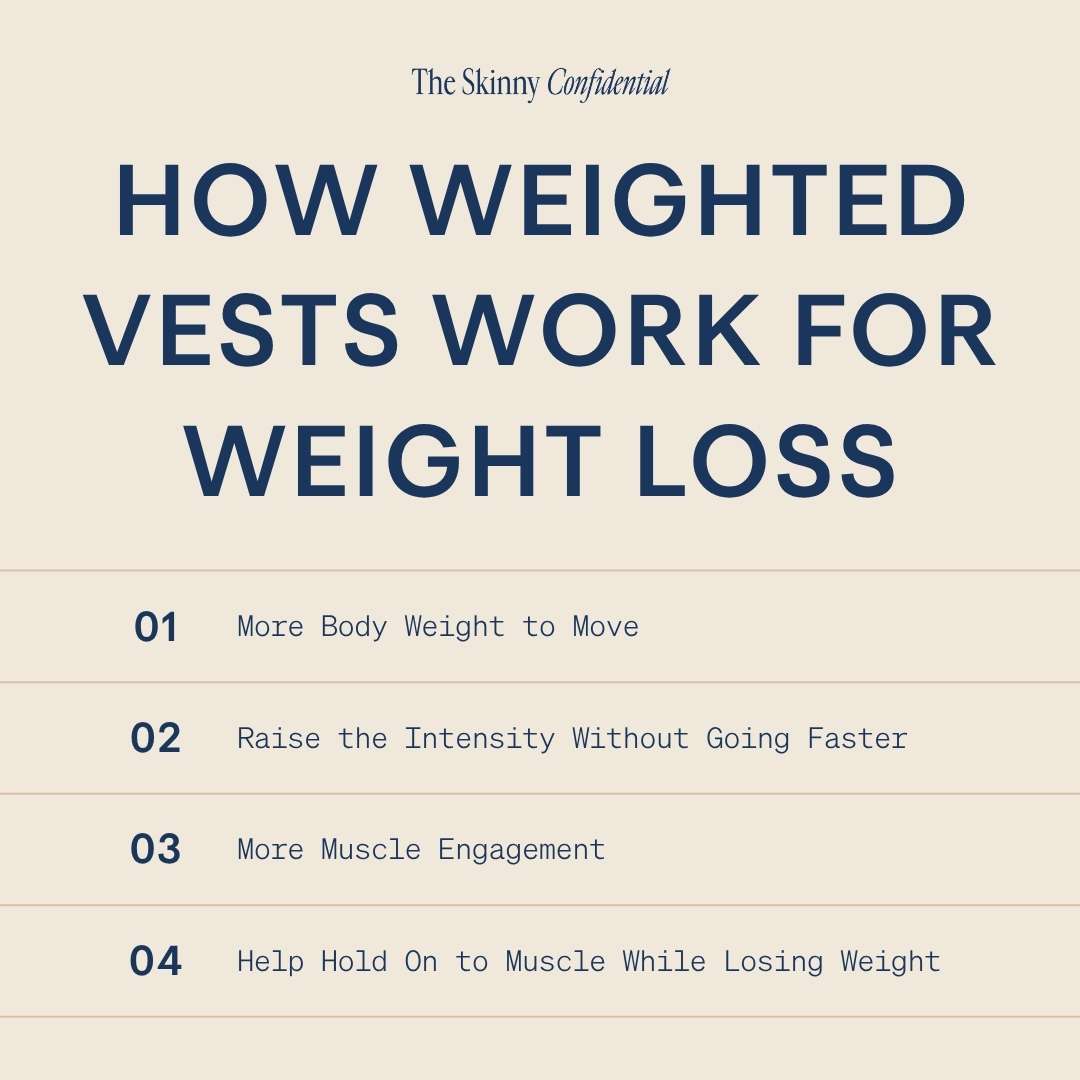
You Have More Body Weight to Move
Wearing a weighted vest increases the total amount of body weight that your muscles have to move, just like using weights or bands during bodyweight exercises like pushups and squats.
Extra weight on your body literally means that your muscles have to work harder with each step, each time you stand up off the couch, and each set of stairs you climb. All that additional hard work for your muscles can burn more calories and build more strength.
You Can Raise the Intensity Without Going Faster
If you’re not a fan of running, or increasing your pace feels like it leads to more impact and potential for injury, wearing a weighted vest may be one way to raise your intensity without increasing your speed. It could potentially help you spend less time on higher-impact, faster-paced workouts and more time on lower-impact, slower-paced workouts.
More Muscle Engagement
When you’re walking around wearing a weighted vest, it takes work from, and helps strengthen, a handful of other muscles to help carry the weight and stabilize it, including those in your:
- Glutes
- Legs
- Core
- Upper back
Help Holding On to Muscle While Losing Weight
Losing weight in a calorie deficit can also mean losing some hard-won lean muscle, but adding weighted resistance to your weight loss efforts (plus strength training) can help preserve muscle, which is important for maintaining a healthy metabolic rate.
Remember the 2020 study above? The heavier-vest group lost fat while their muscle mass stayed intact.
How to Use a Weighted Vest for Weight Loss
Wearing a weighted vest may help you build muscle and burn a few extra calories. As with all fitness endeavors, you should start light, move within your comfort and form, and increase slowly. Comfort, good form, and showing up matter far more than how much weight you’re carrying.
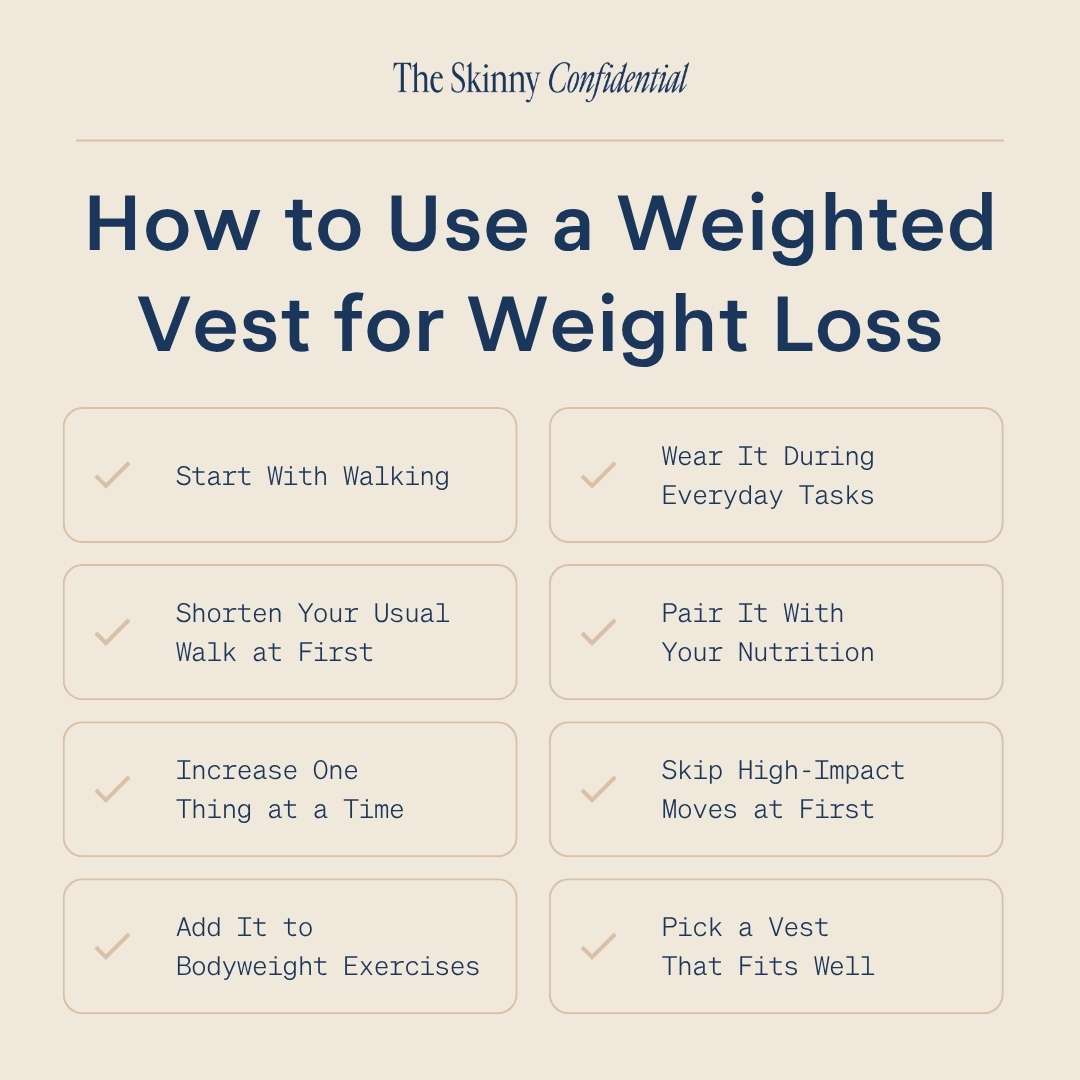
Start With Walking
If you’re just starting to work out, or you like to keep things low impact, consider using your vest while walking, which is already an easy and effective weight loss tool. There’s no complicated programming necessary to wear a weighted vest on your typical walking route. In fact, that’s what most of the studies do.
However, your body will be working a bit harder when wearing a weighted vest, so make some modifications at first.
Shorten Your Usual Walk at First
Shorten the duration or distance of your typical walk at first since walking while wearing a weighted vest will place different demands on the body. Overtraining at first can result in more soreness or an injury, leading you to skip walking workouts altogether.
Increase One Thing at a Time
Once your body adapts to wearing the vest, gradually increase the challenge by changing one aspect at a time (e.g., adding on weight, wearing it for longer, walking at a faster speed, walking on hills) to determine what’s most effective for you. Not all at once.
Add It to Bodyweight Exercises
Once walking feels comfortable, try wearing a weighted vest when doing other bodyweight exercises (e.g., bodyweight squats, lunges, step-ups, push-ups) to challenge your muscles a little more. That way you’ll have to add less (if any) dumbbell weight down the road. If you want to build on that, our guide to strength training for women is a good place to start.
Wear It During Everyday Tasks
You could also wear it around during the day while running errands, doing household chores, walking the dog, etc. Every task asks a little more of your muscles, which adds a little more effort to your day. Just keep it to shorter stretches at first, since wearing a vest all day may strain your muscles and joints.
Pair It With Your Nutrition
All that calorie-burning walking isn’t going to amount to much if you don’t pay attention to nutrition. Weight loss comes down to your overall calorie intake and expenditure, so it’s important to wear your vest and form good nutrition habits simultaneously to see results.
Translation? A vest won’t outwork your diet. Our post on healthy eating and weight loss is a good place to start.
Skip It for High-Impact Moves at First
It’s best to avoid high-impact exercises, like jumping and running, in the beginning. While running burns more calories than walking, adding a weighted vest to the mix could be rough on the joints and more likely to cause muscle strains.
Pick a Vest That Fits Well
If you don’t already have a weighted vest, we’d look for one that fits properly, meaning it should lie flat against your body and be snug enough that it won’t shift when you walk (or during other types of exercises if you plan on using it for that, too). Ideally the vest should spread weight out evenly to avoid pulling in any one direction and come with padding on the shoulder straps.
Some even allow you to add and subtract weights so you can start with lighter resistance and work your way up without investing in a new vest when you build more muscle. If the vest doesn’t lie nicely, it could throw off your form and just not feel fun to wear, leading you to leave it in the closet. If you’re building a home gym or workout station, our at home workout equipment roundup would be a good start.
How Heavy Should a Weighted Vest Be for Weight Loss
Studies on walking in a weighted vest used vests that ranged from about 10 to 15 percent of your body weight, but experts recommend that beginners start with weights closer to 5% of body weight, which would be about 7 to 8 pounds for a 150-pound person. Starting out with a weight that’s too heavy could lead to poor form and cause discomfort or pain in the joints.
This is exactly why an adjustable weighted vest is so useful. Ultimately it comes down to your fitness and health level and how comfortably you can move around in it, and a doctor or personal trainer could be helpful resources for figuring out the right amount of weight to start with, too.
Who Should Talk to a Doctor Before Using a Weighted Vest
A weighted vest isn’t right for everyone. Before using a weighted vest, check with your doctor if:
- you experience back, neck, shoulder, hip, or knee pain
- you have osteoarthritis, rheumatoid arthritis, or any type of arthritis
- you have osteoporosis
- you have heart or lung issues (make sure your doctor clears you to use a weighted vest before using one)
- you’re pregnant or recently delivered a baby
After giving birth, your core and pelvic floor muscles will need time to recover to make sure your body is ready for added skeletal loading. It’s best to give yourself time to fully recover after delivering a baby, and you can read more in our article on postpartum weight loss. Getting back to added load training too early on may set back your recovery time.
Build Your Weighted Vest Habit Into a Bigger Wellness Routine
A weighted vest is far from one-size-fits-all. Just as our founder, Lauryn Bosstick, built The Skinny Confidential around finding tools to make your life easier, it’s important to remember that these types of wellness and fitness tools are best incorporated in tandem with a healthy diet, regular physical activity, strength training, sleep, and more.
As always, start on the lighter side and remember that consistency is key, since a little, often, adds up. And if in doubt, reach out to a board-certified medical professional for help and advice on whether added load is right for your body.
Looking to incorporate even more tools to up your wellness and fitness game? Check out our Ice Roller, Mouth Tape (to help you achieve deeper sleep), or Beauty Salt (for everyday hydration), and browse the rest of the Skinny Confidential shop.
XO, The Skinny Confidential team