

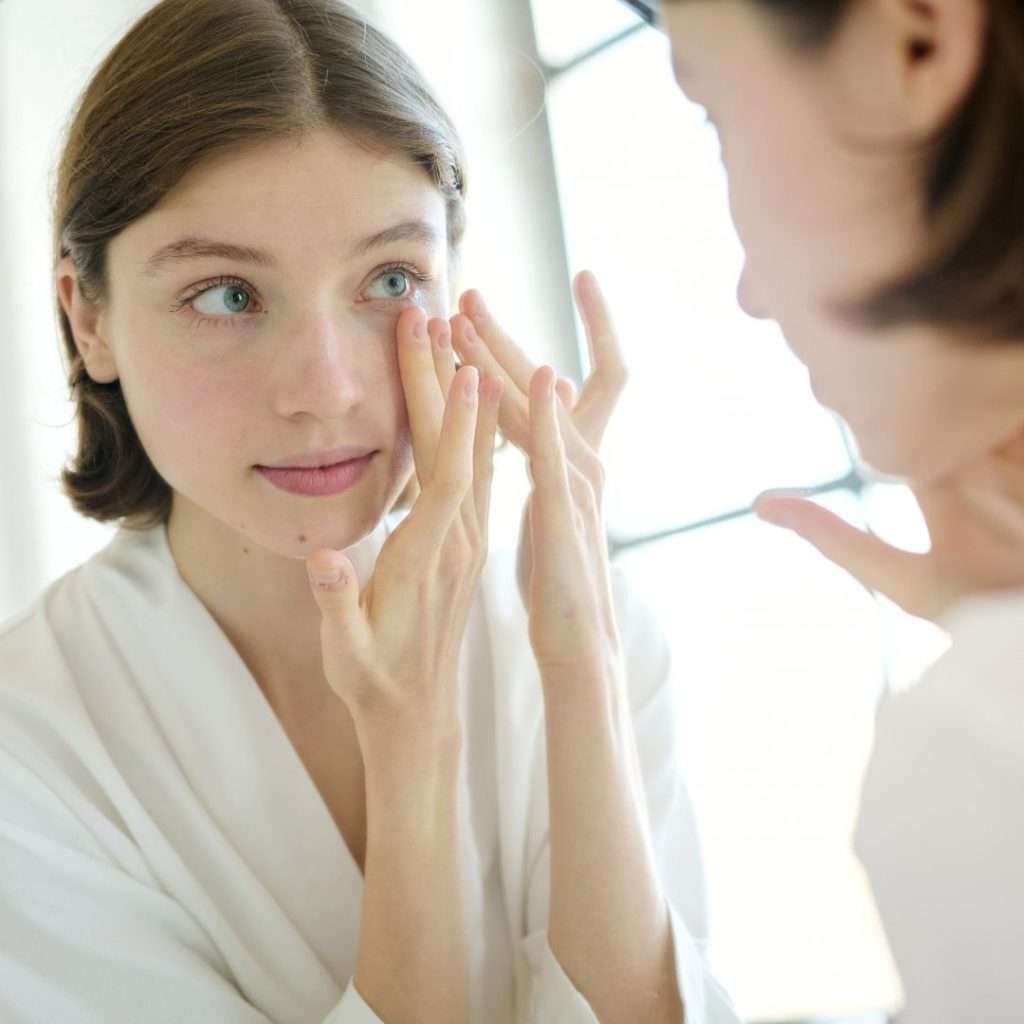
Skin inflammation and redness are some of the most common concerns in skincare. Irritation, flushing, sensitivity, skin that looks uneven and blotchy, we’re sure you know exactly what we’re talking about.
And the frustrating part is that there isn’t even a universal cause for either concern.
Sometimes it happens after a new product. Other times it happens because of the weather or a bad nights’ sleep. But the bottom line is that redness and inflammation are rarely random. In most cases, it’s your skin telling you that something is off.
The trick is learning to read the reaction and respond in the right way. When you understand the trigger, you can create a plan of action for preventing these same annoying concerns from popping up in the future.
So here’s how to reduce inflammation and redness. We’ll talk about how both reactions can affect the skin and give you a few practical steps you can take to actually calm things down (the right way!).

How to Reduce Skin Inflammation and Redness
When it comes to reducing redness and inflammation, you’ll usually want to focus on four things: identify your triggers, support the skin barrier, focus on calming ingredients, and adjust your skincare habits that may be contributing to the problem.
This isn’t a one-size-fits-all approach because different skin concerns need different care. For example, redness from sun exposure is completely different from redness due to an allergic reaction or a flare-up caused by a chronic skin condition.
Before you begin to change anything, get clear on what’s causing the reactions in the first place. Here are a few things worth ruling out:
- Harsh or too-frequent exfoliation
- A new active ingredient introduced too quickly
- Environmental factors like sun, wind, heat, and cold
- An allergic reaction to a skincare product or fragrance
- A weakened or dehydrated skin barrier
When you know where to start, you can actually address the root cause of the redness and inflammation. And if you need a little boost of concentrated advice, our guide on how to reduce redness on face goes deeper on targeted, face-first fixes.
What Does Skin Inflammation Look Like?
Skin inflammation can show up differently from face to face, but there are a few telltale signs that tend to show up across concerns.
Here’s what’s worth watching for:
- Redness or flushing across the cheeks, nose, or affected area
- Warmth or a burning, stinging feeling
- Swelling or puffiness
- Dryness, flaking, or rough patches
- Itchiness or general skin irritation
- Sensitivity to products that never used to bother you
- Uneven-looking texture or tone
On deeper skin tones, inflammation may show up a little more pink, purple, brown, or gray instead of that traditional “red” hue. So in other words, don’t look for redness as your sign to act.

How Does Inflammation Affect the Skin?
Inflammation affects the skin by disrupting the barrier and changing how your skin looks and feels on the surface. Consider your barrier as your skin’s first line of defense. When it’s healthy and supported, it helps keep moisture in and irritants out. But when inflammation enters the picture, everything gets thrown off.
An inflammatory response can lead to irritation, sensitivity, and visible texture changes. It also tends to create a loop: a compromised barrier gets triggered more easily, which fuels inflammation, which just continues to weaken the barrier.
Inflammation Weakens the Skin Barrier
Like we mentioned above, your skin barrier is your complexion’s first line of defense, and inflammation just continuously chips away at it. Changes in that protective layer can lead to moisture loss, which can lead to dryness, which can then lead to possible damage and inflammation.
That’s why calming your skin and barrier repair really go hand in hand. Support your barrier and you may notice that a lot of that redness and reactivity slowly start to go away on their own.
Inflammation Can Worsen Certain Skin Conditions
For some people, inflammation isn’t a one-off experience. It’s tied to ongoing inflammatory skin conditions like rosacea, eczema, and atopic dermatitis, where the skin stays in a constant reactive state.
Let’s zero in on atopic dermatitis.
This chronic inflammatory skin condition is caused by a weakened barrier and an overactive immune response. It can lead to dry, itchy, and inflamed patches that can easily flare with weather changes, irritants, stress, or even skincare products.
At-home routines can help you manage things, but if you’re dealing with persistent skin redness and inflammation from a chronic condition, it’s definitely worth chatting with a dermatologist. The right treatment plan may look different for everybody.
Inflammation Changes How Skin Looks
Beyond feeling painful and irritating, inflammation can also change your skin’s appearance. Dilated blood vessels near the surface create that flushed, red look, while barrier disruption shows up as dullness, rough texture, and an uneven tone.
Fortunately, these visible changes are often the first thing to improve once you start calming the skin the right way.

How to Reduce Redness and Inflammation of the Skin
Simplify Your Routine First
When it comes to skin inflammation, less is genuinely more. Cut your routine back to the essentials: a gentle cleanser, a barrier-supporting moisturizer, and sunscreen. Pause the actives, the scrubs, and anything with fragrance until your protective barrier is able to get a real reset.
If you’re dealing with constant puffiness, our post on how to reduce swelling on face pairs nicely with this practical, realistic approach.
Lean on Calming, Anti-Inflammatory Ingredients
Certain ingredients are worth their weight when your skin is reactive. Aloe vera is a classic for a reason.
The plant’s phenolic compounds and polysaccharides work together to soothe irritated skin, manage post-treatment sensitivity, and give your barrier a hydration boost. Plus, it’s naturally anti-inflammatory!
Other calming, barrier-loving ingredients to look for:
- Hyaluronic acid to draw in and hold hydration
- Squalane to reinforce a dry, compromised barrier
- Niacinamide to help visibly reduce redness over time
- Ceramides to rebuild the barrier’s structure
Support and Rebuild the Skin Barrier
If your barrier is the culprit behind the redness, hydration can be one of the easiest ways to address it. Layer a humectant like hyaluronic acid under a richer moisturizer to lock everything in, and skip anything that leaves your skin feeling tight or squeaky.
By the way, if you do notice that your skin feels tight or squeaky after cleansing or applying a new product, take it as a warning sign. This can mean that you’ve stripped your skin, not supported it.
For additional information, read our guide “How to Repair Your Skin Barrier Naturally.”
Cool the Skin to Calm Visible Redness
This one will sound too easy, but that’s how you know it’s good. When you’re dealing with inflammation, sensitive skin, redness, and even puffiness, temperature is an underrated tool. Cold constricts surface blood vessels, which is exactly why cooling the skin can visibly (and temporarily) reduce flushing and puffiness.
But don’t take a frozen spoon to your skin in call it a day; treat yourself to a tool designed for a refresh: an ice roller! But not just any ice roller, grab our TSC Ice Roller.
Kept in the fridge and rolled over clean skin, its cool aluminum head helps soothe irritated skin, ease that flushed look, and give an inflamed complexion a moment to settle. It’s a gentle, low-effort way to work depuffing and lymphatic drainage into a routine that’s already focused on gentle, practical recovery.
Never Skip Sun Protection
You may love the natural bronze and skin freckles from some time spent in the sun, but your skin definitely doesn’t.
Sun is one of the biggest drivers of barrier disruption and long-term skin sensitivity. By breaking down intercellular lipids and weakening your structural proteins (AKA collagen and elastin), it can lead to things like fine lines, wrinkles, transepidermal water loss (TEWL), and inflammation.
In other words, sun protection is a non-negotiable. Finish every morning routine off with TSC Caffeinated Sunscreen, and don’t skip reapplication during the day.
Patch Test to Avoid an Allergic Reaction
Before you introduce anything new, patch test it. Dab a small amount of a new product on your inner arm or jawline and wait a day or two. It’s the simplest way to catch an allergic reaction before it spreads across your whole face.
Your Calmest Skin Starts With Understanding Skin Redness
The fastest way to reduce inflammation and redness is to stop guessing and start understanding your skin. Identify the trigger, simplify your routine, support your barrier with calming ingredients and give reactive skin the gentle care it needs.
Do that consistently, and the redness, the sensitivity, and the uneven look tend to follow. Small, smart habits, better skin. That’s the whole philosophy.
This post is for educational purposes only and is not intended as medical advice. If you have a persistent skin condition or are unsure about a symptom, please consult a board-certified dermatologist or your healthcare provider.
XO, The Skinny Confidential team