

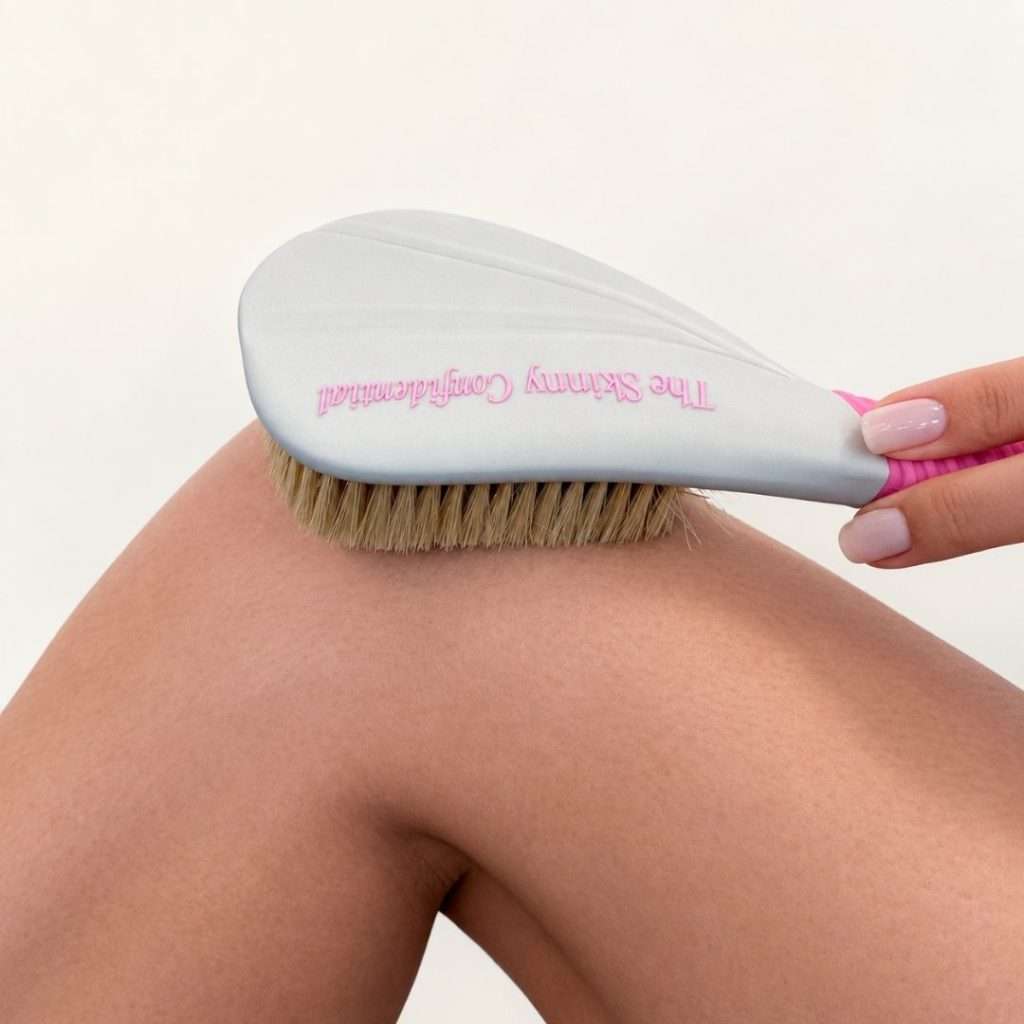
Cellulite is normal. You can work out, moisturize religiously, drink water, and you can still have those little dimples on your thighs, hips, and butt.
But if you want to make cellulite look a little less noticeable, dry brushing is one of the at-home rituals worth trying. It’s simple, inexpensive, it takes just a few minutes, and honestly, it feels really good on your skin.
Will dry brushing permanently get rid of cellulite? No, it’s not magic unfortunately! But it can definitely temporarily smooth the look of your skin, increase circulation, and stimulate your lymphatic system for overall wellness. When something feels this good and only adds a few minutes to your routine, we’re all for it.
So here’s what dry brushing actually does when it comes to cellulite, how it works, and how to do it at home:
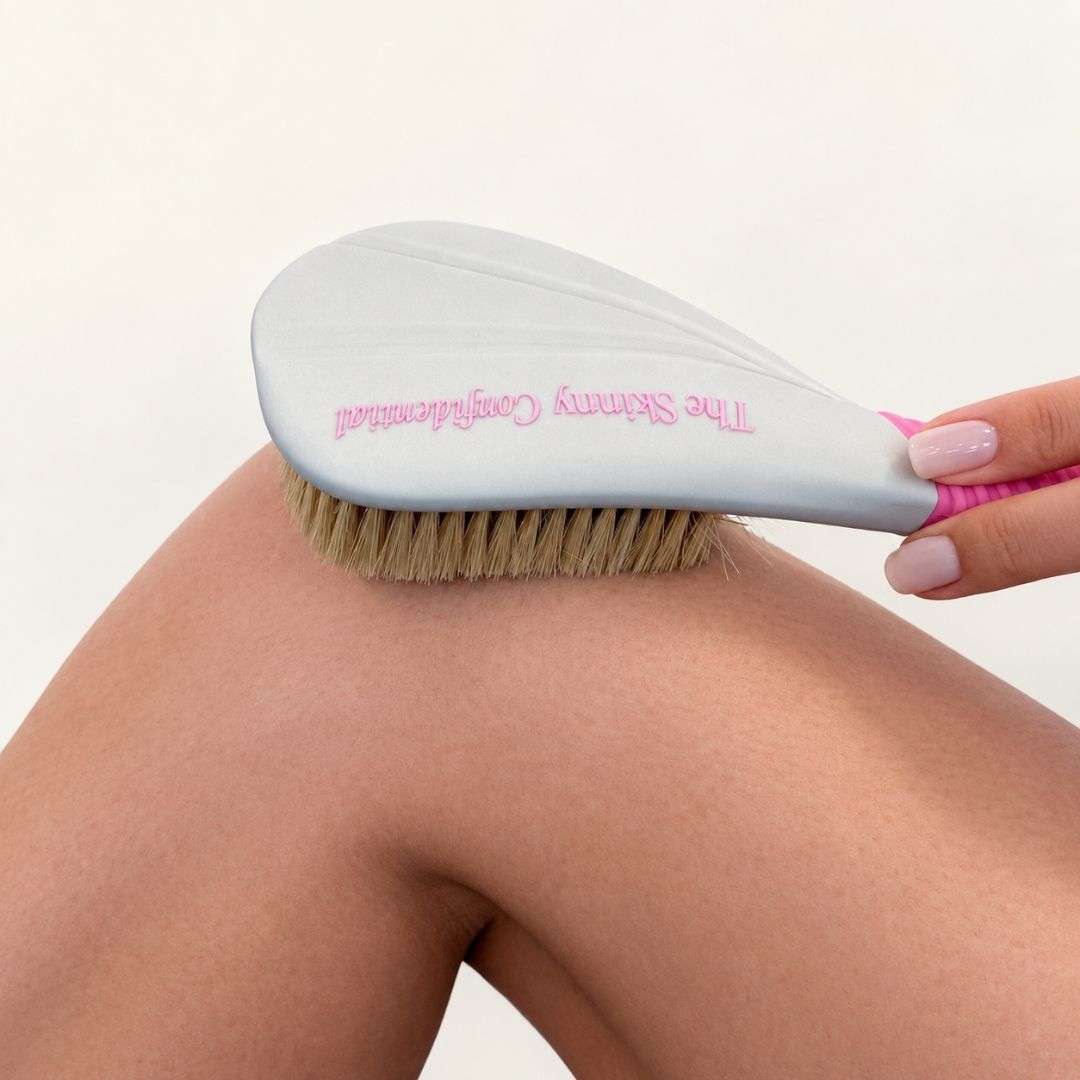
Dry Brushing for Cellulite: What You Need to Know
Dry brushing is a form of mechanical exfoliation. You sweep a dry, bristled brush over the skin in gentle strokes, usually before you shower. So what does cellulite have to do with this?
We’ll get into the full details below, but here’s the skinny: As you brush, the bristles lift away dead skin cells. Your skin may feel smoother afterward and look a little pink from the brushing.
That temporary boost basically plumps the skin, making it look hydrated and smooth.
But keep your expectations realistic. There’s a difference between a temporary change in how skin appears and a lasting reduction in cellulite itself.
Will Dry Brushing Get Rid of Cellulite?
No, dry brushing doesn’t permanently get rid of cellulite. Instead, it temporarily makes the skin smoother and more plump. But honestly, dry brushing wasn’t really designed to permanently get rid of cellulite in the first place.
Cellulite occurs when fat cells push against the skin while taut bands of connective tissue pull downward, creating a push-pull effect that causes the dimpled appearance. Dry brushing doesn’t affect the connective tissue beneath the skin. (Remember, structure is different from aesthetic!)
Think of it like a lip plumping gloss: great for plumping the lips for a few hours, won’t last much longer than that. Dry brushing literally works the same way; the bristles work on the surface while cellulite lives underneath.
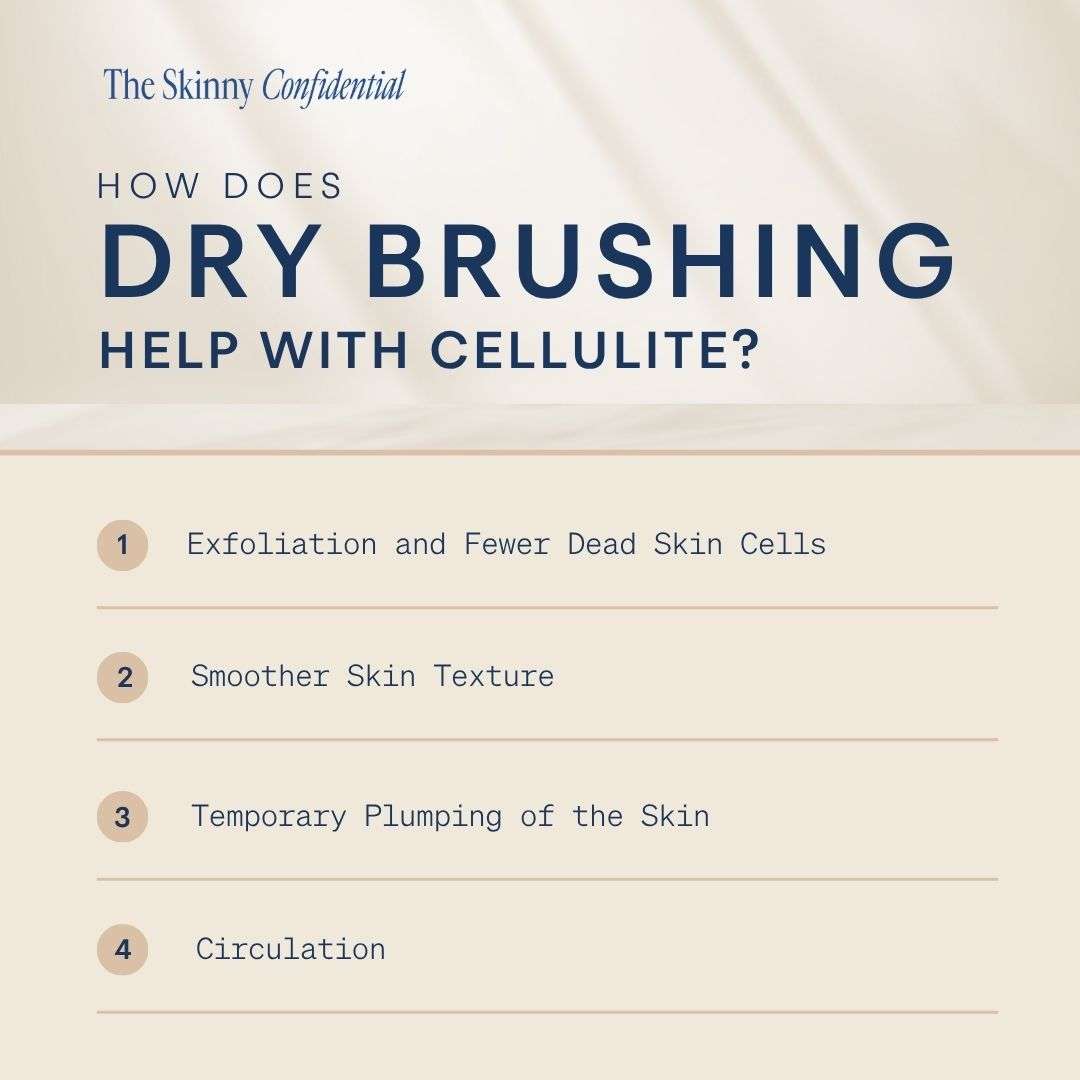
How Does Dry Brushing Help With Cellulite?
Exfoliation and Fewer Dead Skin Cells
Dry brushing is AMAZING for gentle exfoliation. The bristles physically loosen dead skin cells that’ve built up on the surface, so you don’t have to deal with that frustrating texture issue you probably know all too well. But exfoliation isn’t just great for baby soft skin! It can also help unclog pores and make dull-looking skin a little brighter.
Smoother Skin Texture
Trust us when we say that you don’t know soft skin until you dry brush. By brushing away that layer of dead skin, it gives you a softer surface for the rest of your body skincare routine. And back to the uneven, rough texture thing: you might notice that some of the uneven texture looks a little less obvious, too.
Temporary Plumping of the Skin
Dry brushing gets blood moving near the surface of your skin, so don’t be surprised if your legs look a little flushed right after. They may look slightly plumper and smoother, too, which can soften the appearance of cellulite dimples for a while.
It may not be changing the structure of cellulite, but it may make people think about how incredibly soft and hydrated your legs look!
Circulation
Ever notice that energizing feeling you get after a good dry-brushing session? The skin feels warm and refreshed, which makes sense considering you’ve just spent a few minutes stimulating it with a bristled brush!
You’ll also probably hear people use terms like lymphatic drainage or lymphatic system when they talk about dry brushing. The research on that is a little less clear, but it’s one reason why the technique has become so popular with pretty much, well, everyone!
We get even deeper on the benefits in our full breakdown of the benefits of dry brushing.

How to Dry Brush Cellulite the Right Way
Step One: Start With Dry Skin and the Right Brush
Both your skin and your brush should be completely dry. There may not be one single dry brush that works for everyone, but we typically recommend swapping those harsh, stiff bristled brushes for something soft and smooth.
Our Skinny Confidential Dry Brush is a great example. Soft, boar-head, natural bristles and an ergonomic handle that’s easy to use? This is what you want for a soft, gentle exfoliation.
Don’t have a TSC Butter Brush? Don’t worry, that doesn’t count you out from following the steps below.
Step Two: Start at Your Feet and Move Upward
Start at your feet and work upwards toward your heart in long, smooth strokes. That’s the direction that research shows supports your body’s natural blood flow, which can help stimulate circulation.
Step Three: Use Light, Consistent Strokes
Try to remember that you’re polishing skin, not scrubbing a pan. In areas that tend to be more prone to cellulite, like the thighs and butt, some people choose to do even gentler circular strokes. Take it from us, slow and steady definitely wins the race.
Step Four: Don’t Overdo the Frequency
More isn’t always better. That’s why dry brushing two to three times a week is all you need to ACTUALLY start seeing benefits. Brush too hard or too often and you’re risking micro-tears, tightness, and rebound flaking.
Step Five: Rinse, Moisturize, and Care for Your Brush
Hop in the shower, rinse off all the dead skin cells, and lather on a rich lotion while your skin’s still damp. Emphasis on the last step; lotion does wonders for making the skin look soft and glowy. For more on that head-to-toe payoff, here’s how to have smooth legs.
Also, never (ever) skip brush hygiene. Wash the brush with mild soap every week or two and dry it bristles-down away from shower steam. A damp, cell-coated brush is an ideal home for bacteria and fungi.
When to Skip It and Check With a Pro
If you have super sensitive skin, eczema, psoriasis, varicose veins, or any open or inflamed areas, we recommend dry brushing with caution or skipping it altogether.
The friction can worsen inflammation or trigger flare-ups, and even for healthy skin, going too hard risks redness or microtears.
When in doubt, check with your dermatologist before adding dry brushing to your routine, especially if you’re using active treatments or prescription topicals. Dry brushing safely is definitely possible, but quick conversation is always worth it.
The Smart Way to Approach Dry Brushing for Cellulite
Dry brushing won’t erase or even permanently reduce cellulite. But it can leave you smoother, glowier, and genuinely enjoying your body care routine. And if you ask us, that’s a beautiful place to land.
Think of it as one low-effort ritual among many, best paired with movement, hydration, and skin you actually take care of. Realistic expectations, gorgeous results in the moment, and a practice that feels as good as it looks.
XO, The Skinny Confidential team